
XRF, LIBS, and Radiation Detection Technology
X-ray fluorescence - or XRF - is an essential business and research tool that provides elemental analysis for a huge variety of materials, including geological materials, soil, paint, polymers, ceramics, metals, alloys, petroleum products, paint, and much more. Please use this page to learn about a variety of XRF technologies, and to find out which technologies are best suited to filling your analytical needs.
Introduction to XRF Technology
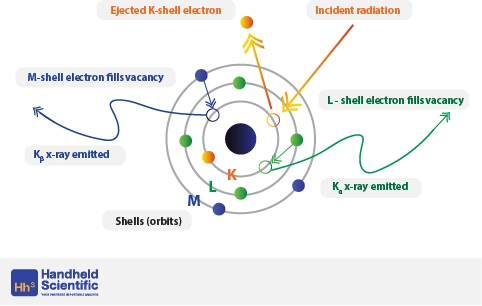
XRF technologies are a diverse set of elemental analysis tools that work on the principle of using x-rays to dislodge electrons from the orbital shells of atoms, creating fluorescence. The energies that bind electrons in these orbital shells are unique to each element, making it possible to determine elemental composition of samples by detecting the fluorescent energies emitted when the bond of electrons to their orbits is broken. This fluorescence is visualized as a spectrum that is characteristic to the elemental or elements present in the sample. XRF technologies have countless industrial, regulatory, and research applications, and are found in the lab and in the field across the globe (and even in space).
Raw XRF data is qualitative and is presented as a spectrum of counts per second at particular energies, with each energy being associated with particular elements. Algorithms and software can then be used to convert counts per second into quantitative and semi-quantitative information regarding the amount of a given element in a sample as measured in percent, ppm, ppb, mg/kg2, or comparatively.
Energy-Dispersive XRF Technology (EDXRF)
All Thermo Scientific™ Niton™ XRF tools use energy-dispersive XRF technology, also known as EDXRF.
KEY BENEFITS:
- Fast and field-portable
- No sample preparation required
- Wide range simultaneous multi-element analysis: Be-Am
EDXRF is a powerful elemental analysis technology that provides fast and reliable multi-element identification—and under certain circumstances quantification—in the range of (F) flourine to U (uranium). Ideal for field and inline industrial uses, EDXRF offers compact, portable, and handheld solutions for elemental analysis in the range of Be (beryllium) through Am (americium). EDXRF requires minimal sample preparation compared to other XRF technologies and can even be used on unprepared samples and used as a field tool.
Since the primary excitation beam of an EDXRF instrument is an x-ray tube or radioactive source that emits x-ray radiation, and since the beam impinges directly on the substrate, all the atoms in the sample (within the x-ray sources excitation range) are excited all at once, and therefore each element's unique x-ray energies will return to the detector and be counted all at once. With EDXRF, you can analyze several dozen elements simultaneously in a matter of minutes - or even seconds.
EDXRF is the ideal elemental analysis tool for two primary sample types: unprepared samples—such as rock on a mine face—and samples that have been homogenized or are naturally homogenous—such as homogenized soil or an alloy sample. Unlike other XRF technologies, EDXRF requires little to no sample preparation and can be applied directly to a variety of surfaces such as rock, ceramics, polymers, construction materials, and much more. EDXRF is entirely non-destructive, so it can be used to carry out elemental analysis of fragile or valuable things, such as gold or archaeological finds.
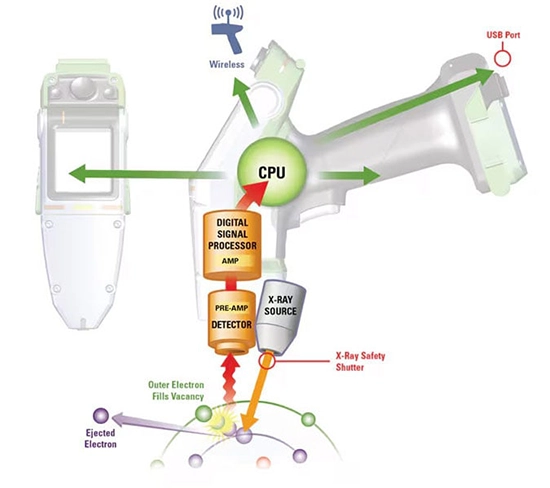
EDXRF technology can be found in countless environments where elemental analysis is essential to learning and productivity, including:
- Inline in manufacturing and processing facilities
- Industrial and university laboratories
- Petrochemical Plants
- Scrap Yards
- Mines
- Geochemical laboratories
- Museums
- Regulatory environments
- In the field with miners, geologists, environmental scientists, lead inspectors, aerospace engineers, regulatory agencies, archaeologists, and countless others, adding valuable data to processes around the world.
The primary limitation of EDXRF is that it cannot detect elements below Na (sodium) on the period table.
Handheld XRF
Handheld XRF is a type of EDXRF that is unique in its portability and ease-of-use. Handheld XRF instruments are lightweight, rugged, and can easily be operated by a novice, providing an analysis range of Mg (magnesium) through U (uranium). Handheld XRF is also typically the lowest-cost technology of the various XRF options available on the market. For these reasons, handheld XRF is an essential tool for a wide range of businesses.
Learn how handheld XRF technology is used in a variety of industries and applications below:

Metal & Alloy Analysis for Manufacturing
Manufacturers must perform precise elemental analysis and PMI of all incoming raw materials, work in progress, and final quality assurance of finished parts. Thermo Scientific Niton Handheld XRF Analyzers deliver accurate, non-destructive PMI and elemental analysis, quickly and easily verifying metal composition and distinguishing between nearly identical alloy grades.

Scrap Metal Recycling
Fast, accurate scrap sorting and metal identification is nonnegotiable when there is such a high risk of scrap containing impurities or hazardous materials contaminating the supply chain. From trace levels to commercially pure metals, Thermo Scientific Niton Handheld XRF Analyzers deliver precise metal analysis with unparalleled speed, performance, and portability.

Precious Metals Testing
Precisely determining the exact composition of gold and precious metals is essential for any successful retail jeweler, pawn shop, precious metals manufacturer, or business that buys and recycles scrap jewelry. Thermo Scientific Niton Handheld XRF Analyzers ensure accurate, non-destructive metal analysis in seconds, providing lab-quality results in a simple, easy-to-use format.
Mining and Geoscience
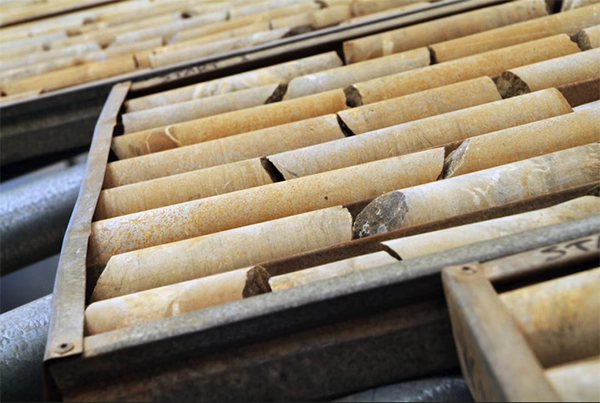
Fast, accurate mineral assay is necessary for exploration and mining operations to be profitable and efficient. Thermo Scientific Niton Handheld XRF analyzers support all stages of the mining process, from exploration to core scanning to ore grade control to bullion testing to tailings analysis, with unmatched precision and speed.
Aerospace
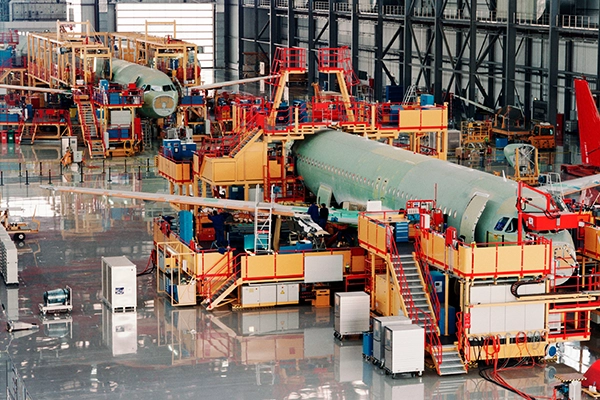
The aerospace industry demands exacting quality and precision because the materials used to manufacture aircraft and spacecraft must stand up to extreme conditions. Thermo Scientific Niton Handheld XRF Analyzers deliver the lab-quality results and enhanced positive material identification necessary to quickly and accurately analyze speciality alloys, detect impurities, or verify the thickness and composition of protective coatings.
Soil Analysis and Testing
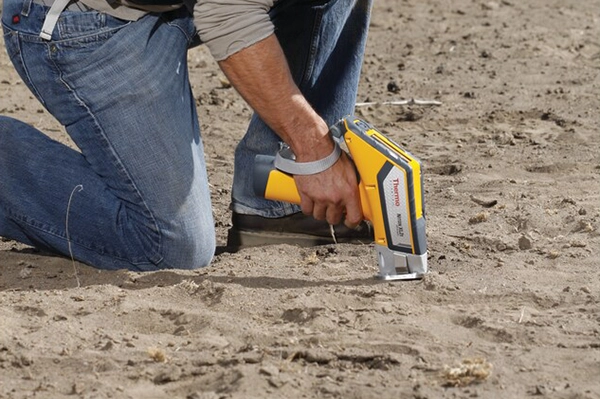
Reliable soil analysis is the first step of soil remediation and clean-up efforts. Thermo Scientific Niton Handheld XRF Analyzers deliver simultaneous analysis of multiple elements for a complete elemental composition and heavy metal contamination profile, providing lab-quality results on-site.

Industrial Lead Paint Analysis
Lead poisoning poses a significant threat to workers engaged in demolition, renovation, or repair projects to industrial buildings. Thermo Scientific Niton Handheld XRF Analyzers quickly and accurately analyze lead (Pb) paint present on a variety of materials commonly used in industrial buildings, such as drywall, wood, stucco, and metal.
Archaeometry & Art Conservation
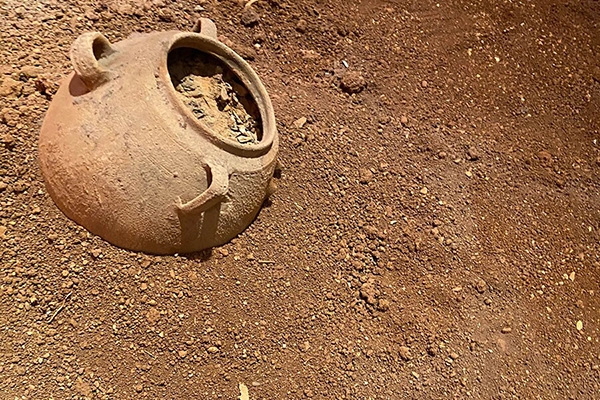
Verifying the exact elemental composition of historic objects and artwork is crucial to archeometry and art conservation, providing the data necessary for proper dating, authentication, provenance, NAGPRA compliance, and much more. Thermo Scientific Niton Handheld XRF Analyzers quickly and precisely detect contaminants while providing enhanced analysis of soil composition, ceramics, textile dyes, glass, glazes and varnishes, pigments and paints, and archeological metals and alloys.
For more information about how handheld XRF technology is used in different industries and applications, check the drop-down menu under "Applications" in the site menu
